Building AI Agents with LLMs: From Prototype to Production


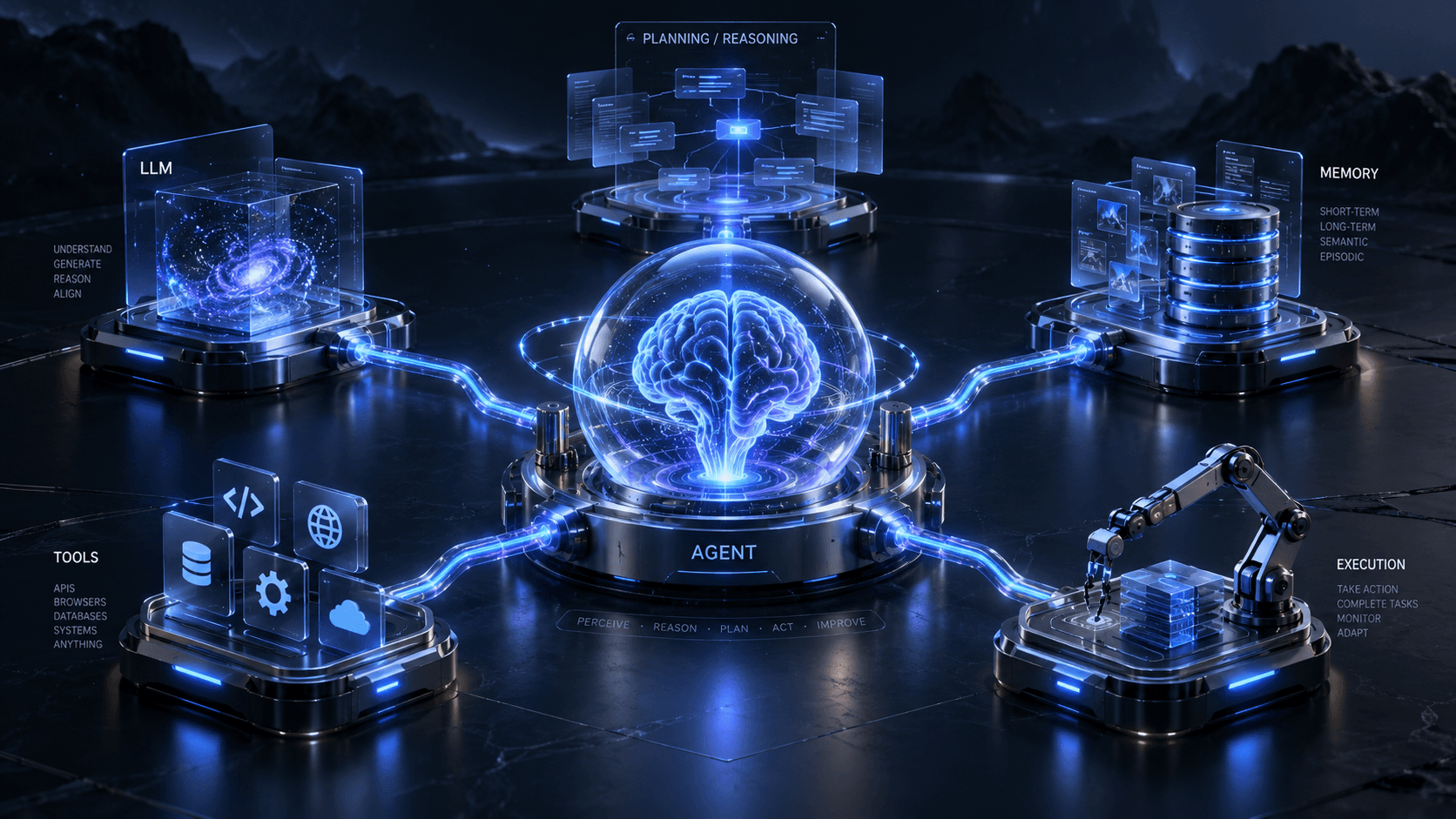
AI Agents create software systems that can reason and execute tasks. Moving from a prototype to production requires architecture, evaluation, security, and operational discipline.
Agent Workflow
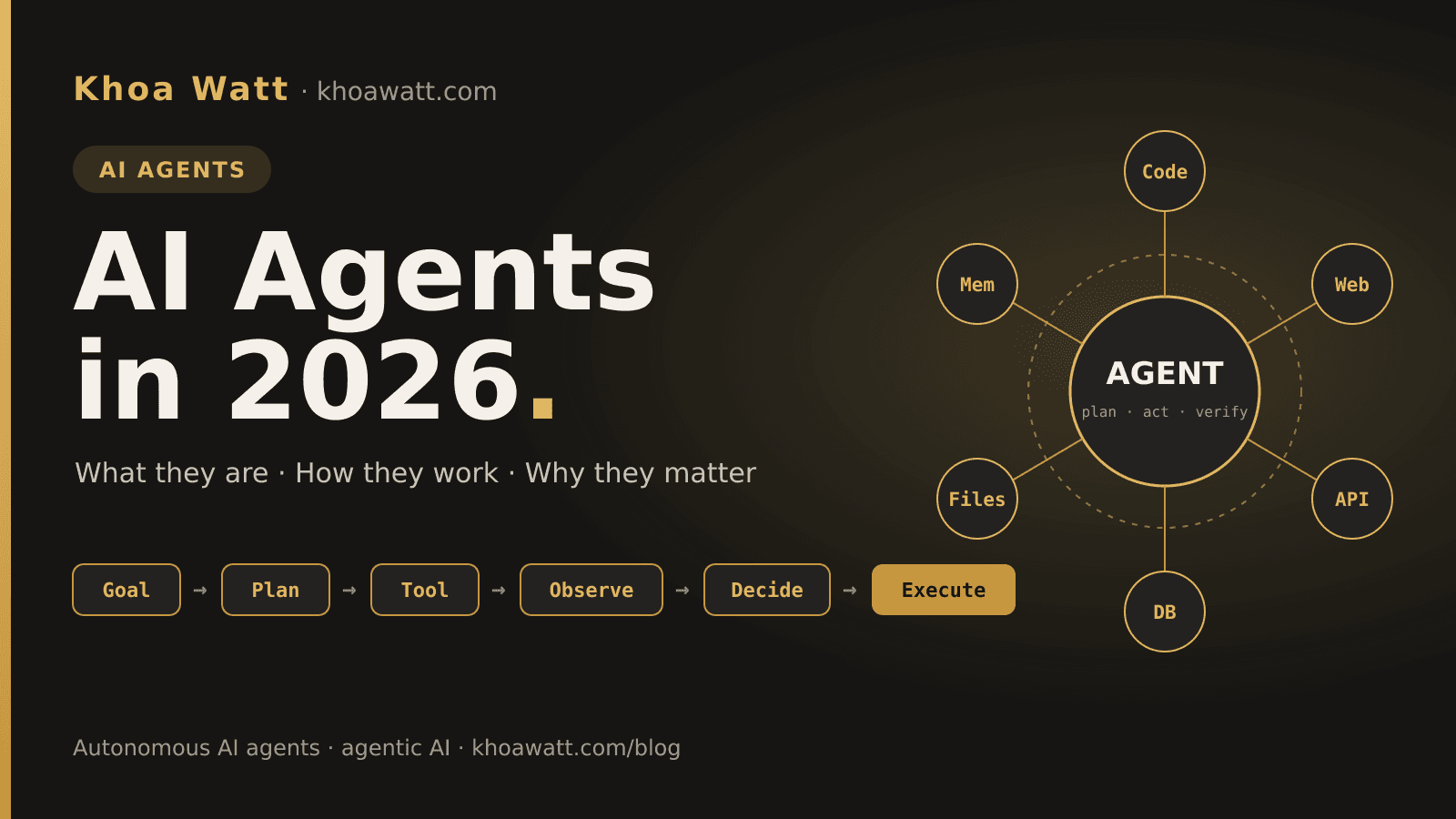
flowchart LR
G[Goal] --> P[Plan]
P --> T[Tool]
T --> O[Observe]
O --> D[Decision]
A prototype usually starts with a simple loop to validate the idea.
Building the Agent Loop
An Agent receives a goal, understands context, selects actions, executes tools, and evaluates outcomes.
while (!task.completed) {
 const action = await agent.plan(task);
 const result = await tool.execute(action);
 task.update(result);
}
From Experiment to Production
Real deployment introduces challenges beyond reasoning ability. Cost, latency, reliability, and user experience become critical factors.
Context management reduces unnecessary token usage. Caching prevents repeated requests, while model selection balances quality and operational cost.
Evaluation and Testing
Agents are harder to evaluate than traditional software because multiple outputs can be acceptable. Teams need test scenarios, quality metrics, and feedback processes.
Production systems should measure accuracy, latency, failures, and workflow completion rates.
Security and Observability
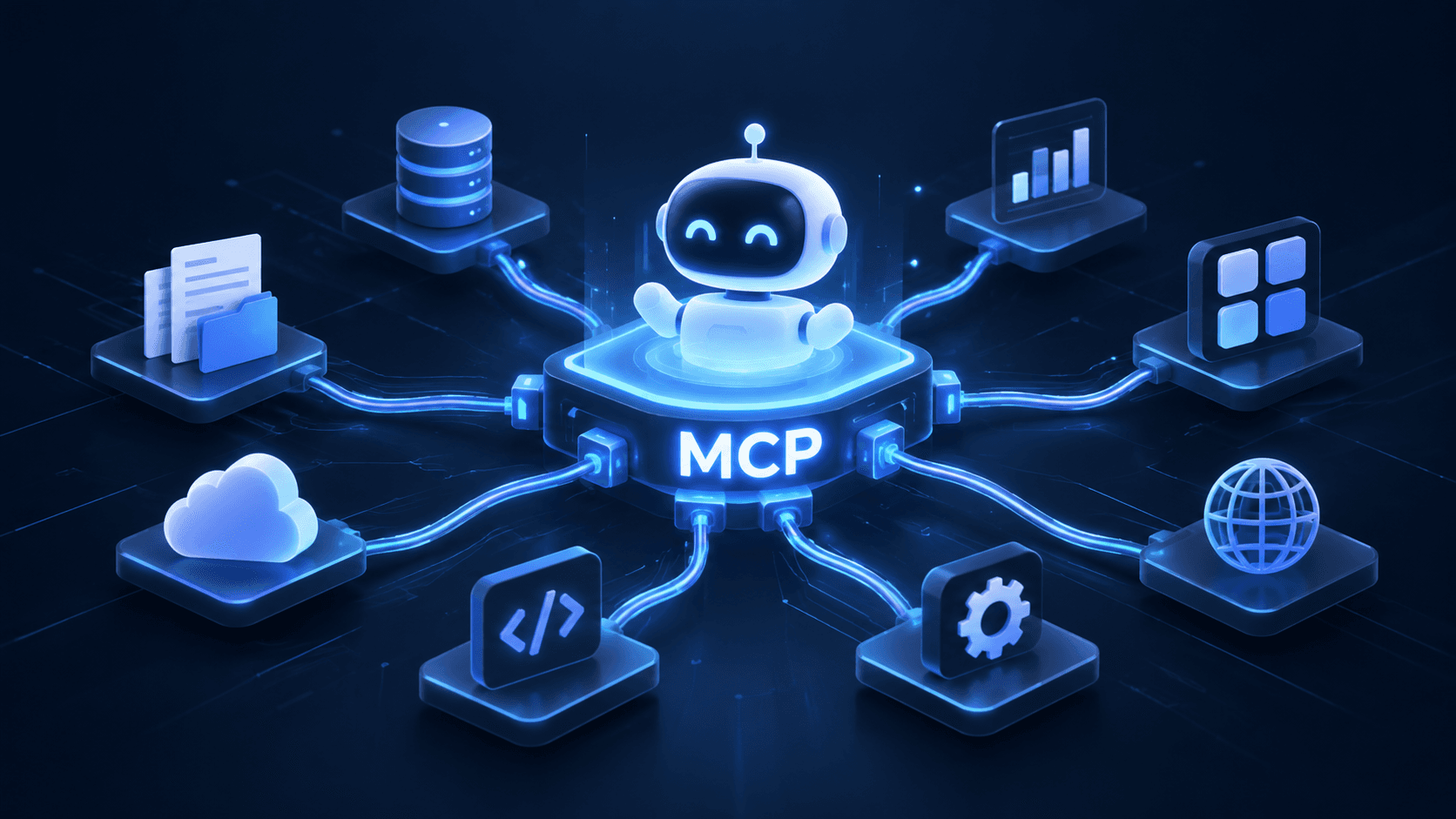
Because Agents can call tools, access boundaries are essential. APIs, databases, and private information require permission controls.
Observability tracks prompts, tool calls, token consumption, and failures. These signals help teams continuously improve the system.
Mini Case Study
A development team creates a coding assistant Agent. The prototype only generates code, but the production version adds project memory, repository tools, evaluation steps, and logging. The Agent becomes more useful inside the engineering workflow.
Best Practices
Start with a narrow problem, measure results, and expand gradually. A good Agent is not one that does everything automatically. It is a system that knows when to reason, when to use tools, and when humans should review decisions.
Sources
- OpenAI Agents documentation
- Anthropic Agent engineering guides
- LangGraph documentation
Recommended Development Process
An effective process usually has four stages. First, define a specific task and limit the Agent scope. Then create a small prototype to validate model capabilities.
After initial success, teams should add logging, evaluation, and error handling before scaling. The final stage focuses on cost optimization, security, and user experience.
Common Mistakes
A common mistake is trying to create a fully autonomous Agent immediately. In practice, Agents need clear boundaries and should request human assistance when necessary.
Another mistake is ignoring input data quality. Powerful LLMs still depend heavily on the data, tools, and workflows designed around them.
Recommended Development Process
An effective process usually has four stages. First, define a specific task and limit the Agent scope. Then create a small prototype to validate model capabilities.
After initial success, teams should add logging, evaluation, and error handling before scaling. The final stage focuses on cost optimization, security, and user experience.
Common Mistakes
A common mistake is trying to create a fully autonomous Agent immediately. In practice, Agents need clear boundaries and should request human assistance when necessary.
Another mistake is ignoring input data quality. Powerful LLMs still depend heavily on the data, tools, and workflows designed around them.
Recommended Development Process
An effective process usually has four stages. First, define a specific task and limit the Agent scope. Then create a small prototype to validate model capabilities.
After initial success, teams should add logging, evaluation, and error handling before scaling. The final stage focuses on cost optimization, security, and user experience.
Common Mistakes
A common mistake is trying to create a fully autonomous Agent immediately. In practice, Agents need clear boundaries and should request human assistance when necessary.
Another mistake is ignoring input data quality. Powerful LLMs still depend heavily on the data, tools, and workflows designed around them.
Recommended Development Process
An effective process usually has four stages. First, define a specific task and limit the Agent scope. Then create a small prototype to validate model capabilities.
After initial success, teams should add logging, evaluation, and error handling before scaling. The final stage focuses on cost optimization, security, and user experience.
Common Mistakes
A common mistake is trying to create a fully autonomous Agent immediately. In practice, Agents need clear boundaries and should request human assistance when necessary.
Another mistake is ignoring input data quality. Powerful LLMs still depend heavily on the data, tools, and workflows designed around them.