AI Agents in 2026: What They Are, How They Work, and Why They Matter

AI agents have moved beyond simple chatbots. Instead of answering one prompt with one reply, autonomous AI agents pursue a goal across many steps: they plan, call tools, observe results, adjust course, and keep going until the job is done. That shift is why agentic AI is now core to modern development.
If you build web apps, internal tools, or automation pipelines, this mental model will save you real rework. This article explains what AI Agents are, how the loop works, and where they add value.
Agents are not just smarter chatbots
A chatbot maps one input to one output. An AI Agent owns an objective such as "find the three slowest API routes and draft a fix." It breaks the request down, gathers context, runs commands, reads files, and reports back with evidence.
Three differences matter. First, persistence: autonomous AI agents keep working across tool calls without a fresh prompt each time. Second, tool use: they query databases, run code, and call APIs through typed interfaces. Third, recovery: when a step fails, a good agent replans instead of quitting or faking success. That loop is agentic AI in practice.
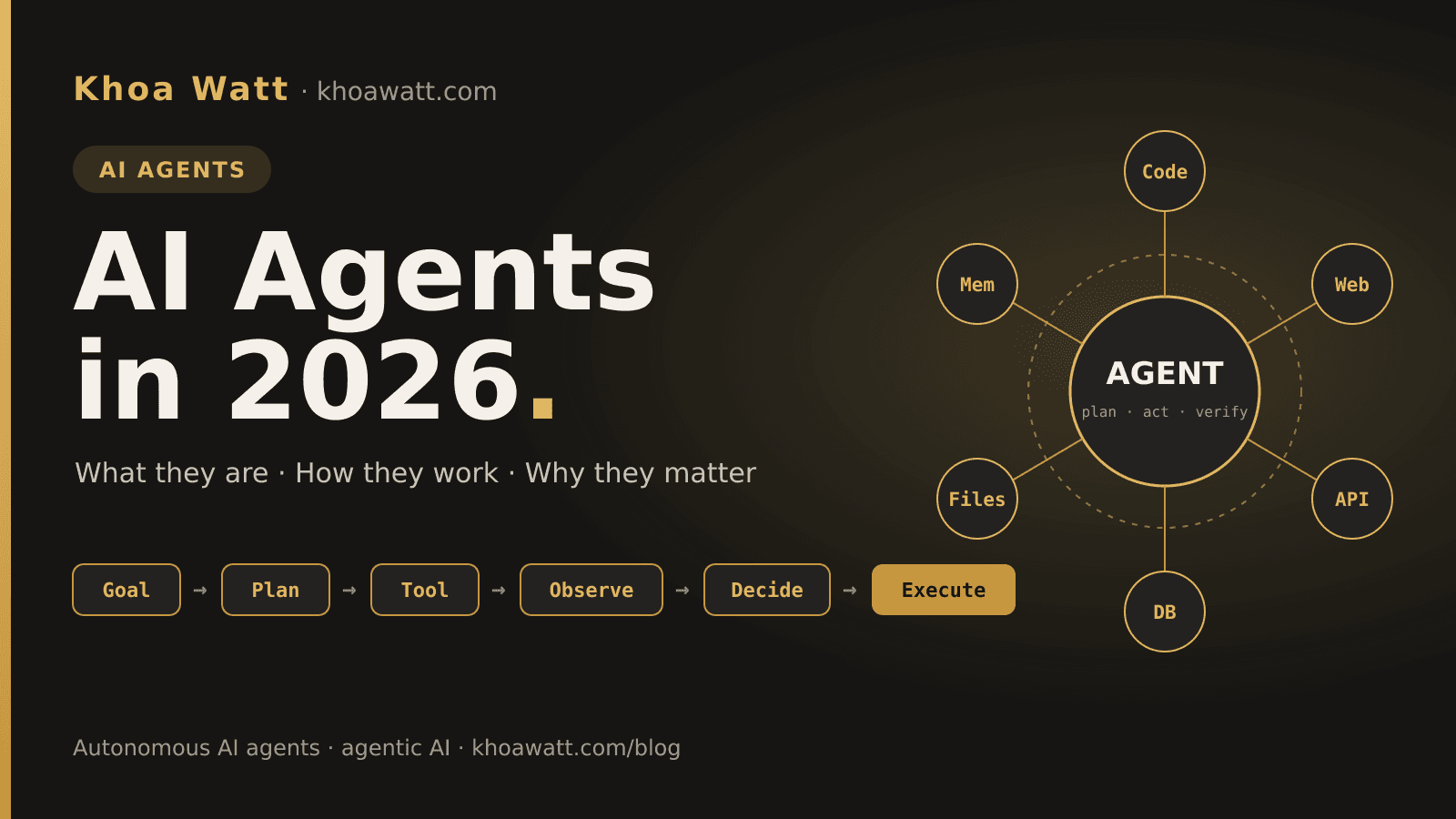
How they work: Goal, Plan, Tool, Observe, Decide, Execute
Most production agents follow the same six-stage rhythm.
Goal must be specific and testable. "Improve checkout" is a wish; "reproduce the staging checkout timeout, find the slowest query, propose a minimal fix" is executable. Vague goals produce wandering trajectories.
Plan drafts a short sequence: explore, reproduce, measure, hypothesize, patch, verify. Keep it small and visible so a human can interrupt early. The plan is a draft that changes as observations arrive.
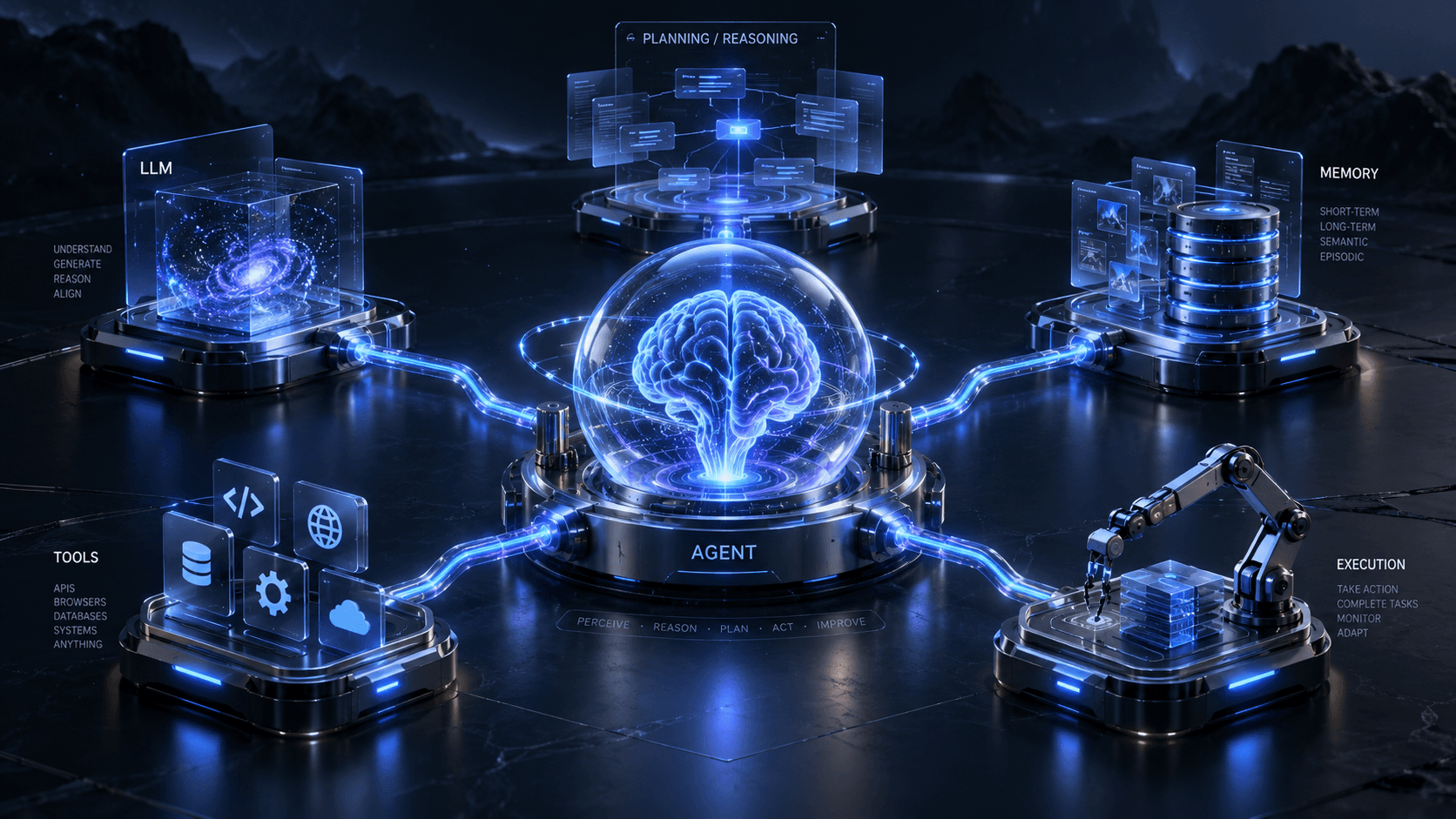
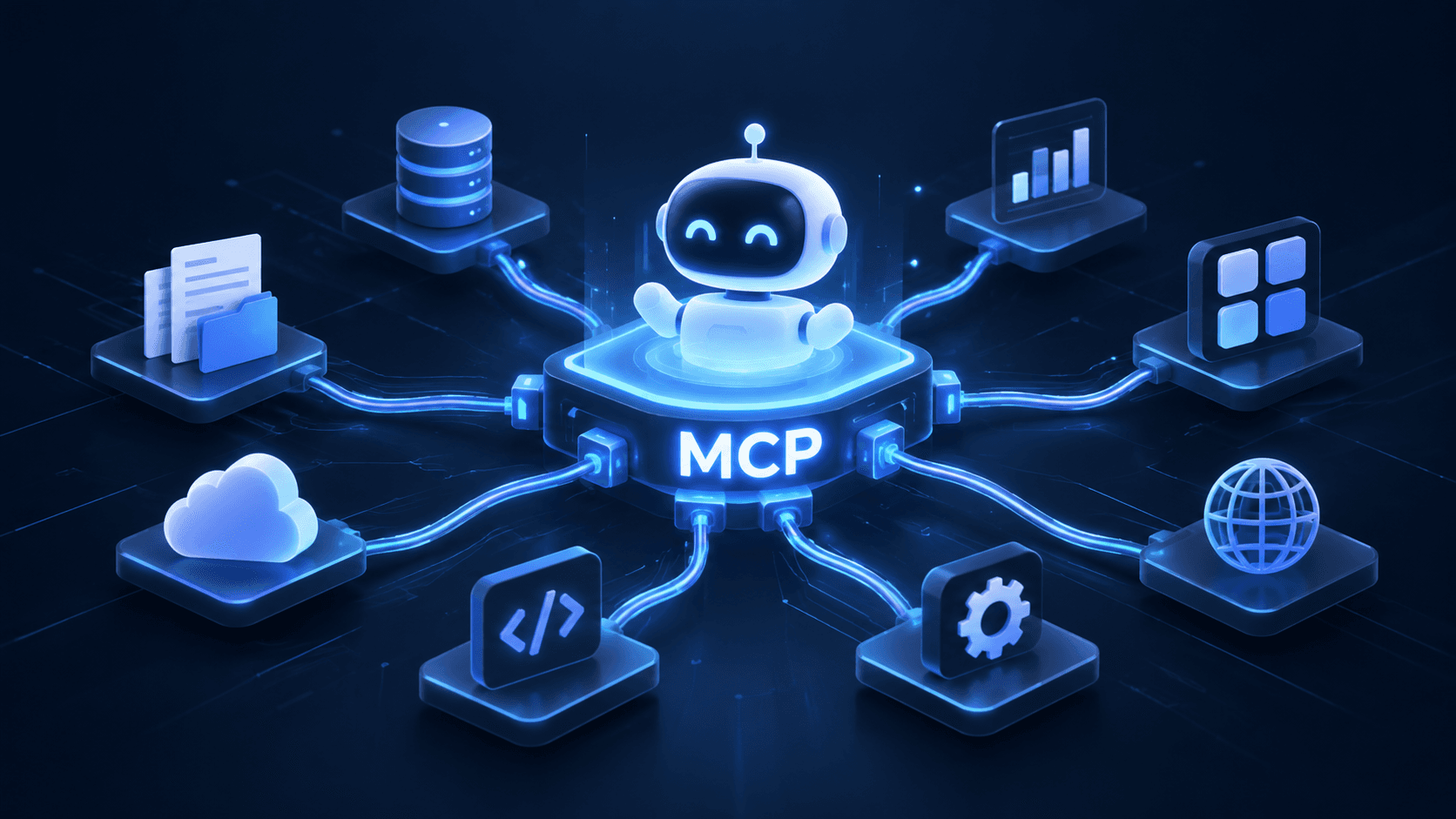
Tool gives the agent hands. Tools are typed functions with clear names: search files, read a handler, run tests, query logs. The model can only invoke what you expose, so designing tools is most of the engineering in agentic AI.
Observe grounds each decision. After every call the agent reads real output: file contents, test results, latency numbers. Without this step, autonomous AI agents drift and hallucinate.
Decide picks the next action: dig deeper, try another hypothesis, ask for a missing credential, or stop. Explicit decision points keep behavior reviewable and prevent infinite loops.
Execute runs the action, records it, and loops back with fresh context until the goal is met, blocked, or out of budget. Step limits, timeouts, and cost caps make AI Agents deployable.
The four capabilities that matter
Planning keeps multi-step work coherent. Each action inherits context, so even a mid-size model can chain a dozen steps toward one outcome.
Tool use turns knowledge into effect. A model that only talks describes your slow query; an agent with database tools finds it and shows before-and-after numbers.
Memory bridges steps. Short-term memory tracks what was tried and rejected; durable memory stores repo conventions and guardrails. A Markdown memory file the agent reads at startup is often enough.
Bounded autonomy builds trust. Grant broad read access but narrow write access. Let the agent explore and draft freely, then require human approval before merging, deploying, or touching customer data.
A minimal loop in TypeScript
The shape fits in one file: a bounded loop, explicit tools, an observation after every call, and a hard stop. Production adds retries, but the shape transfers.
type Tool = {
  name: string;
  description: string;
  run: (input: string) => Promise<string>;
};

async function runAgent(goal: string, tools: Tool[], maxSteps = 8) {
  const history = [`Goal: ${goal}`];
  for (let step = 0; step < maxSteps; step++) {
    const next = await planNext(history, tools);
    const tool = tools.find((t) => t.name === next.name);
    if (!tool) return `Stopped: unknown tool "${next.name}".`;
    const observation = await tool.run(next.input);
    history.push(`Action: ${tool.name}(${next.input})`);
    history.push(`Observation: ${observation}`);
    if (history.join("\n").includes("VERIFIED")) break;
  }
  return history.slice(-6).join("\n");
}

async function planNext(history: string[], tools: Tool[]) {
  // Call your LLM with goal + recent history + tool schemas.
  throw new Error("Wire to your model client.");
}
Keep tool schemas strict, truncate long observations, and define the stop condition up front: verified outcome, user interrupt, or budget exhausted.
Why 2026 is the turning point
Models follow multi-step instructions reliably, one agent spans code, docs, and telemetry, and teams instrument the loop with traces and cost tracking. Triage arrives as a drafted answer with cited logs; migrations arrive as reviewed diffs. Engineers become reviewers and guardrail owners.
Use them where verification is clear
Give autonomous AI agents well-scoped, checkable work: investigations, scaffolding, migrations, test generation, doc sync, first-pass review. Keep humans owning architecture, security, and irreversible production changes. The rule: the agent drafts, the human is accountable for every merged line. Start with one repo, five read tools, one gated write tool, and one metric — then expand.